Aim with a thumb
The camera looks ahead in the direction you are pointing and shakes when you fire. No reload button and no way to ask for one: an empty magazine fills itself the moment it runs dry.
A top-down zombie shooter where the street is a grid and the grid is yours to fortify. Five towns, fifty levels and seven guns. They come out of the dark in fours and then in twenties, and you meet them with what you packed and whatever you got built in time.
No account. No ads. Plays entirely offline.
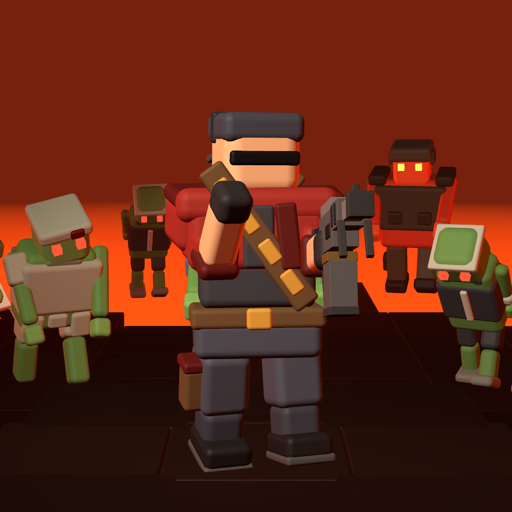
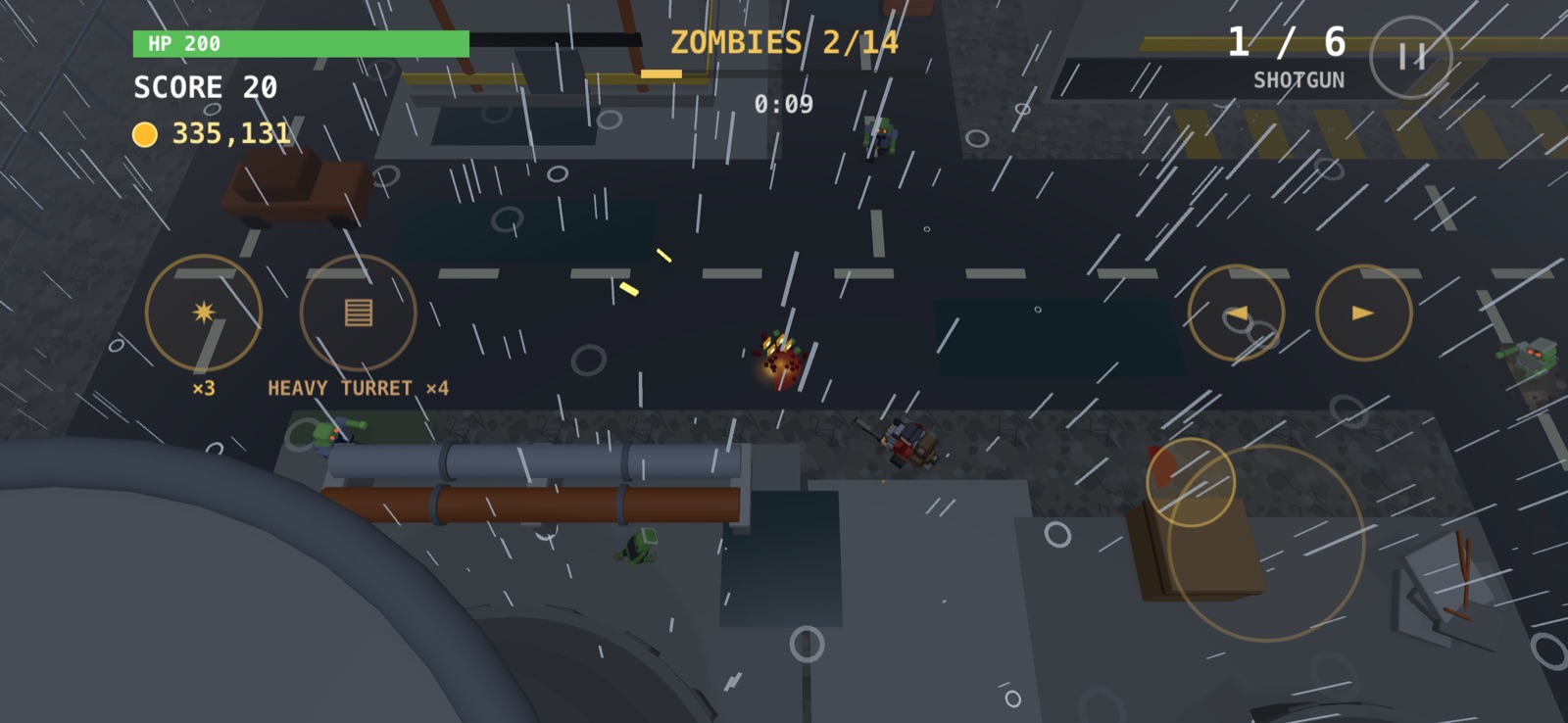
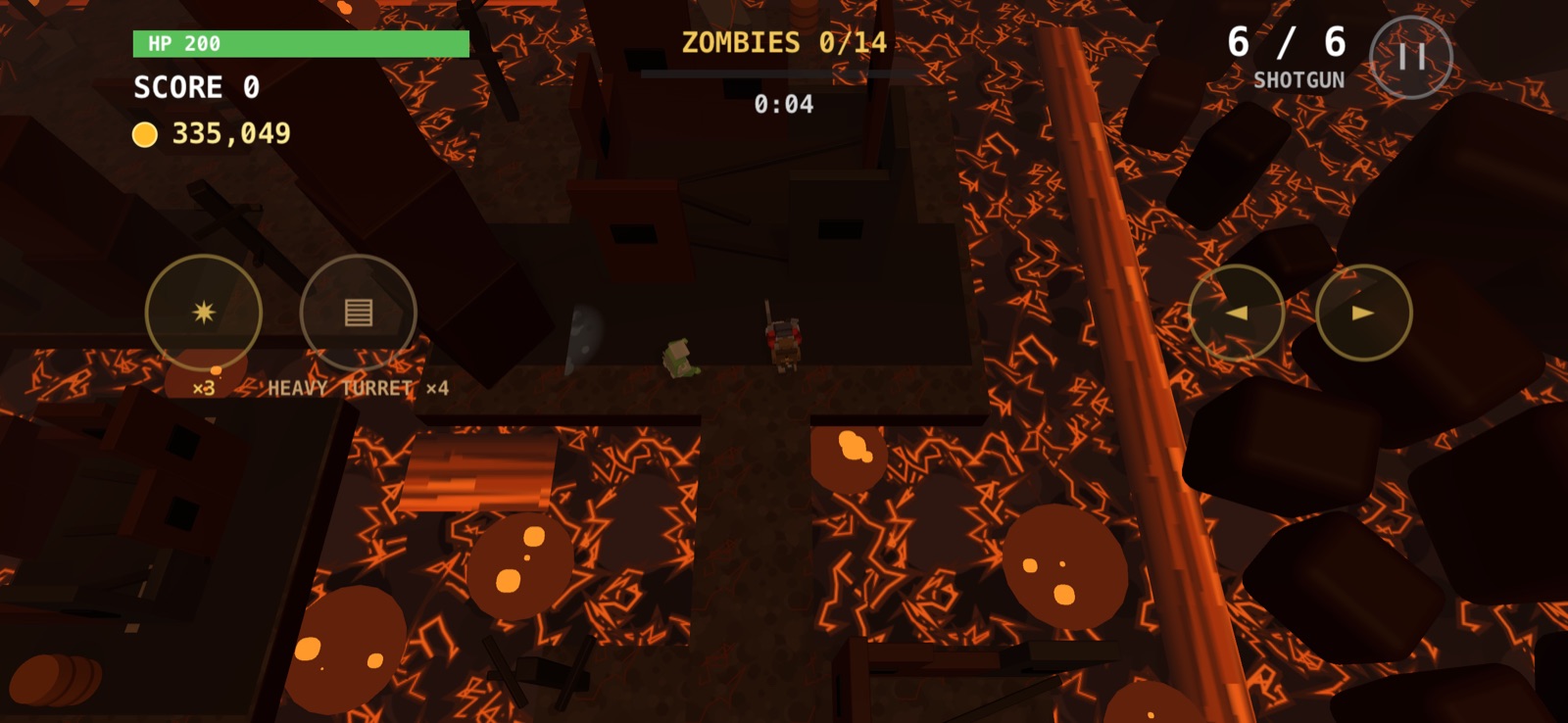
Every shot here is the game running on a phone: the crowd finding its way round your barricade, the moment the fog lifts off the whole site because the lightning went off.
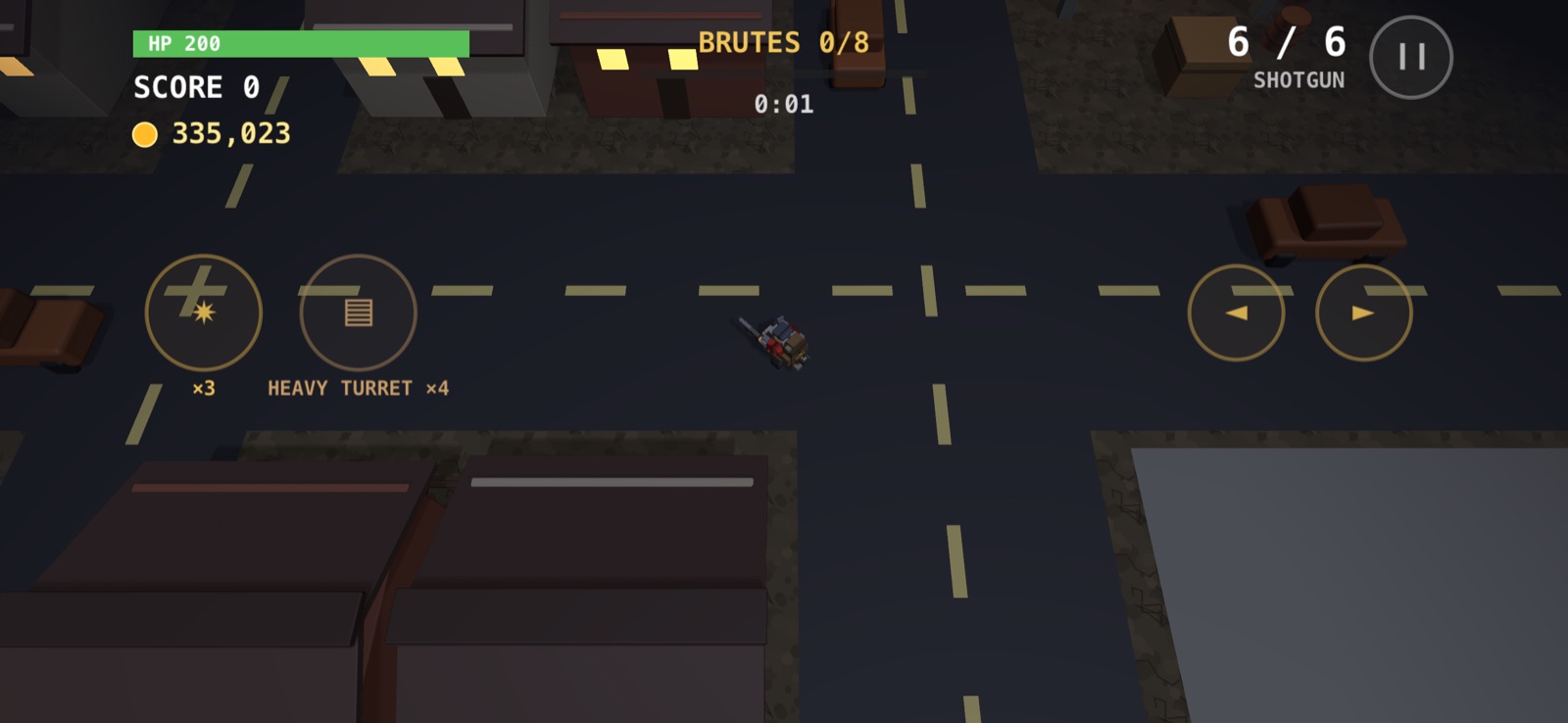
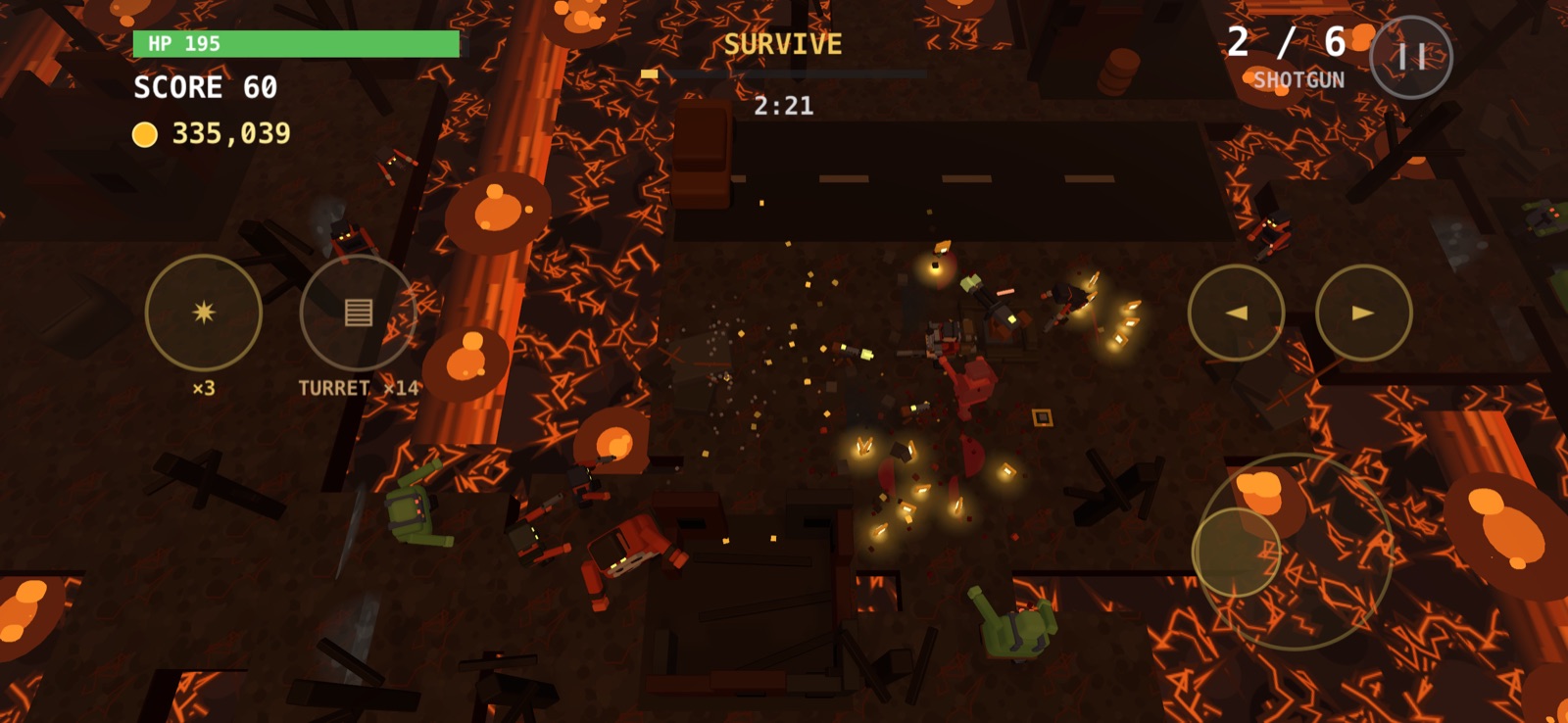
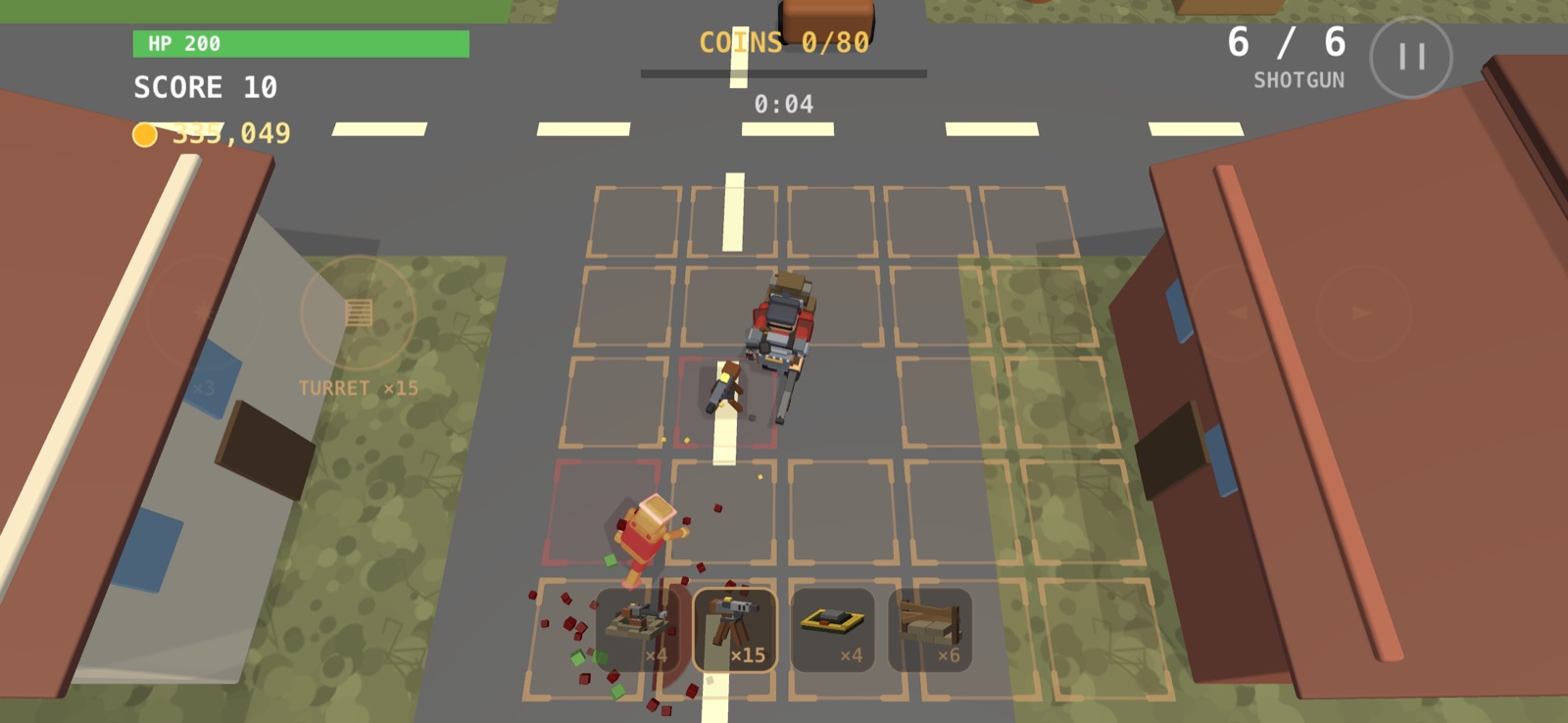

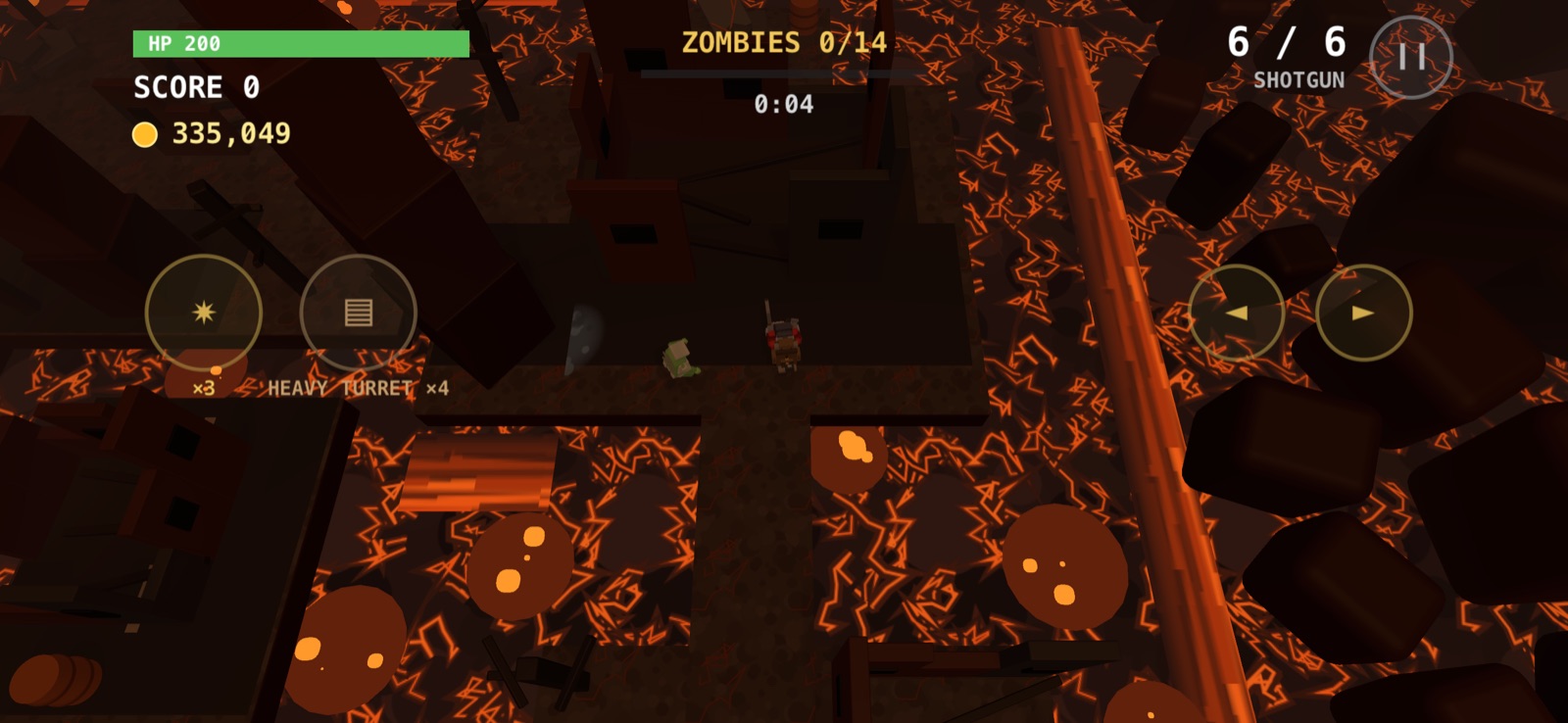
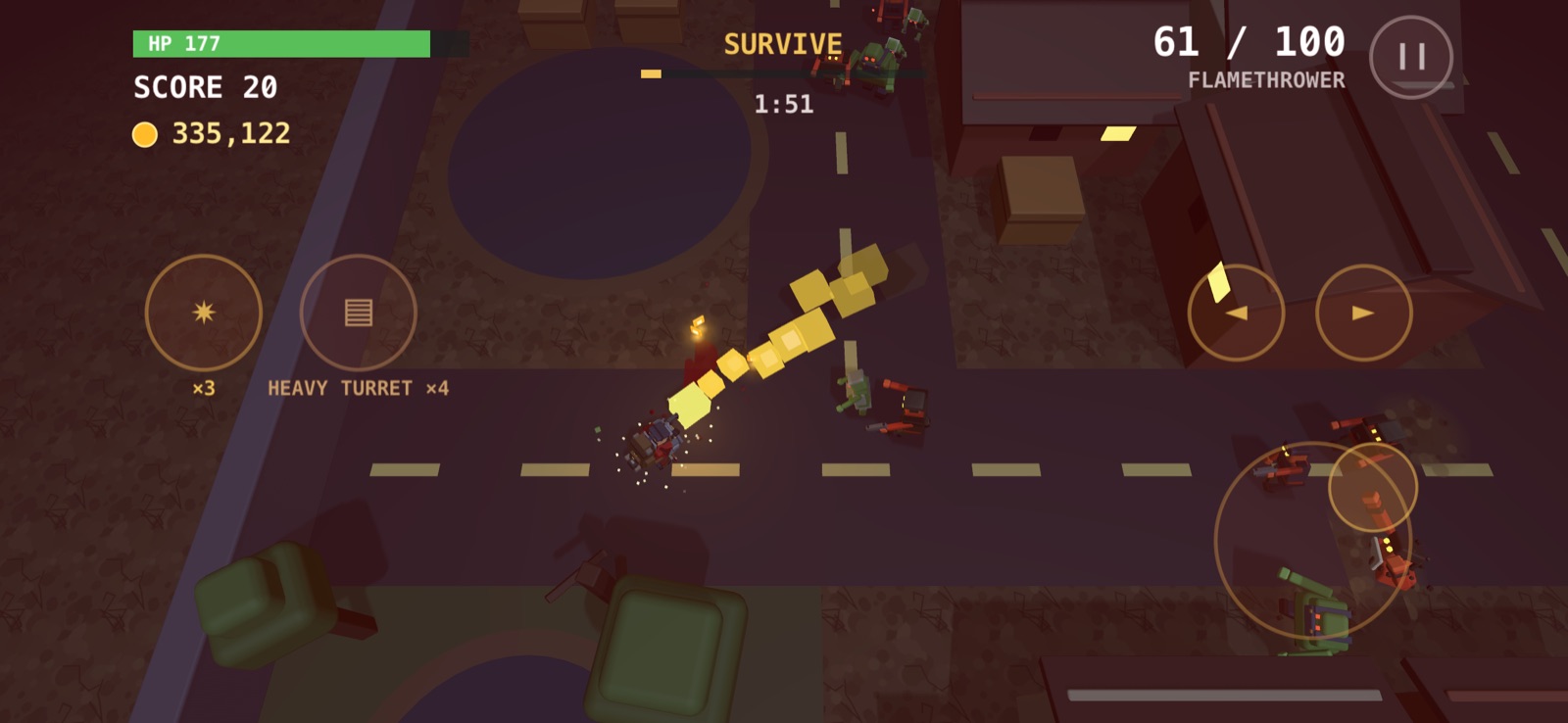
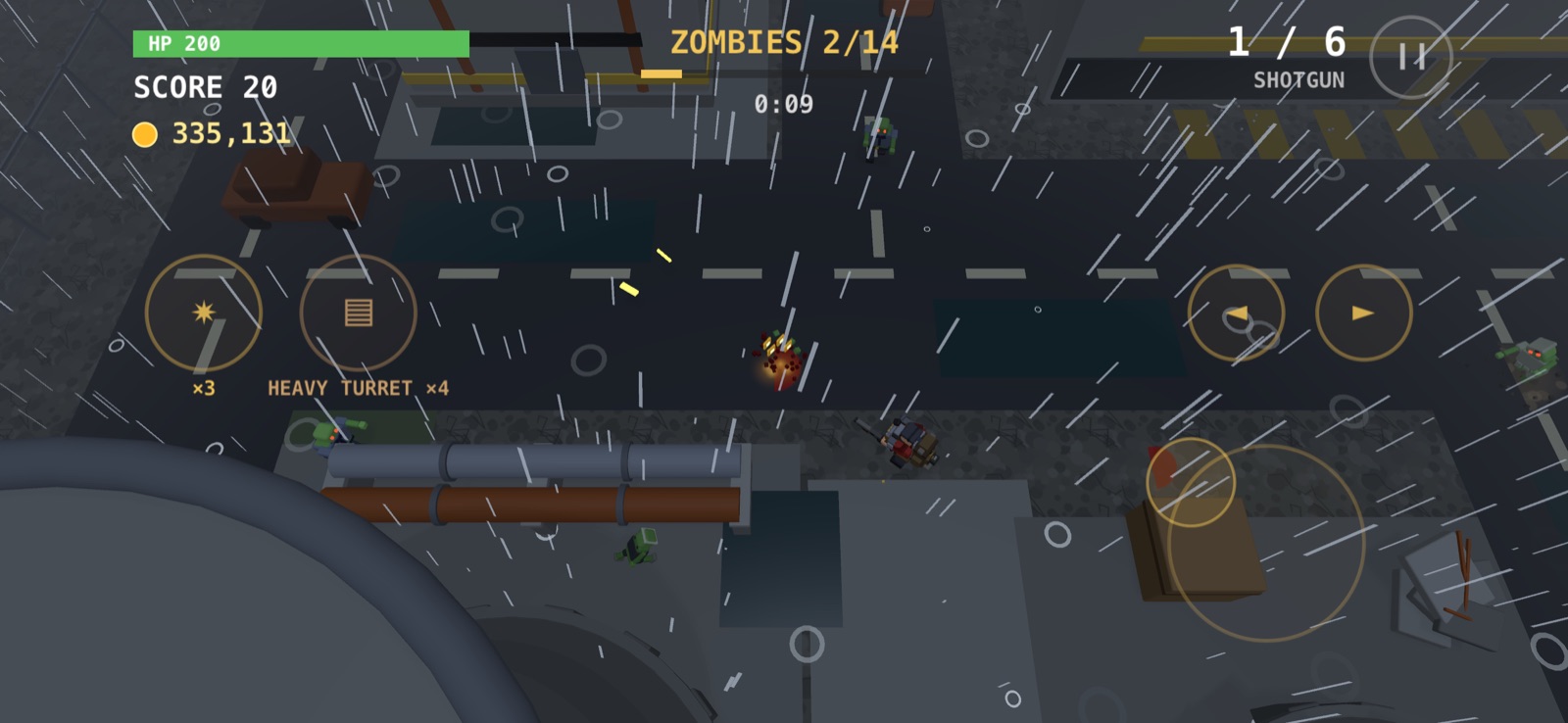

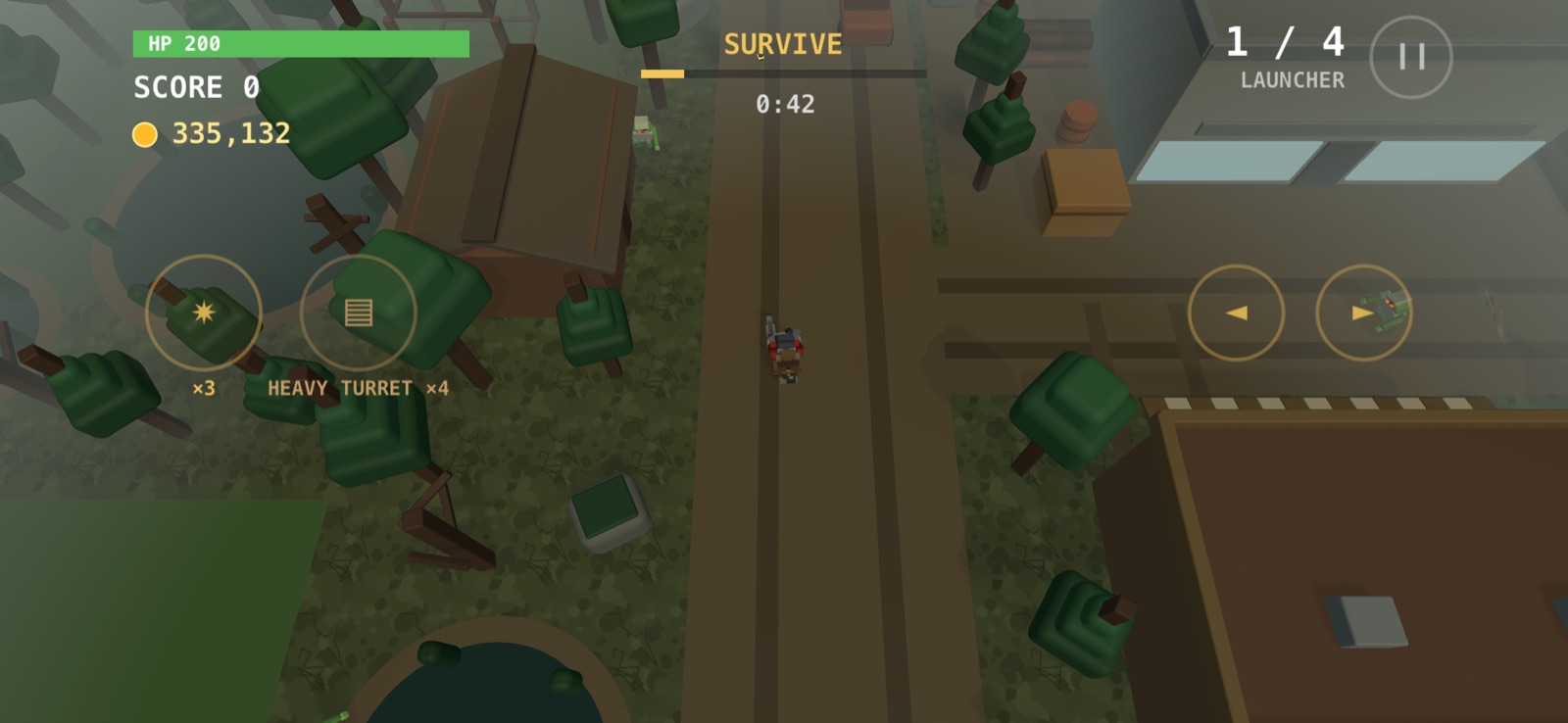
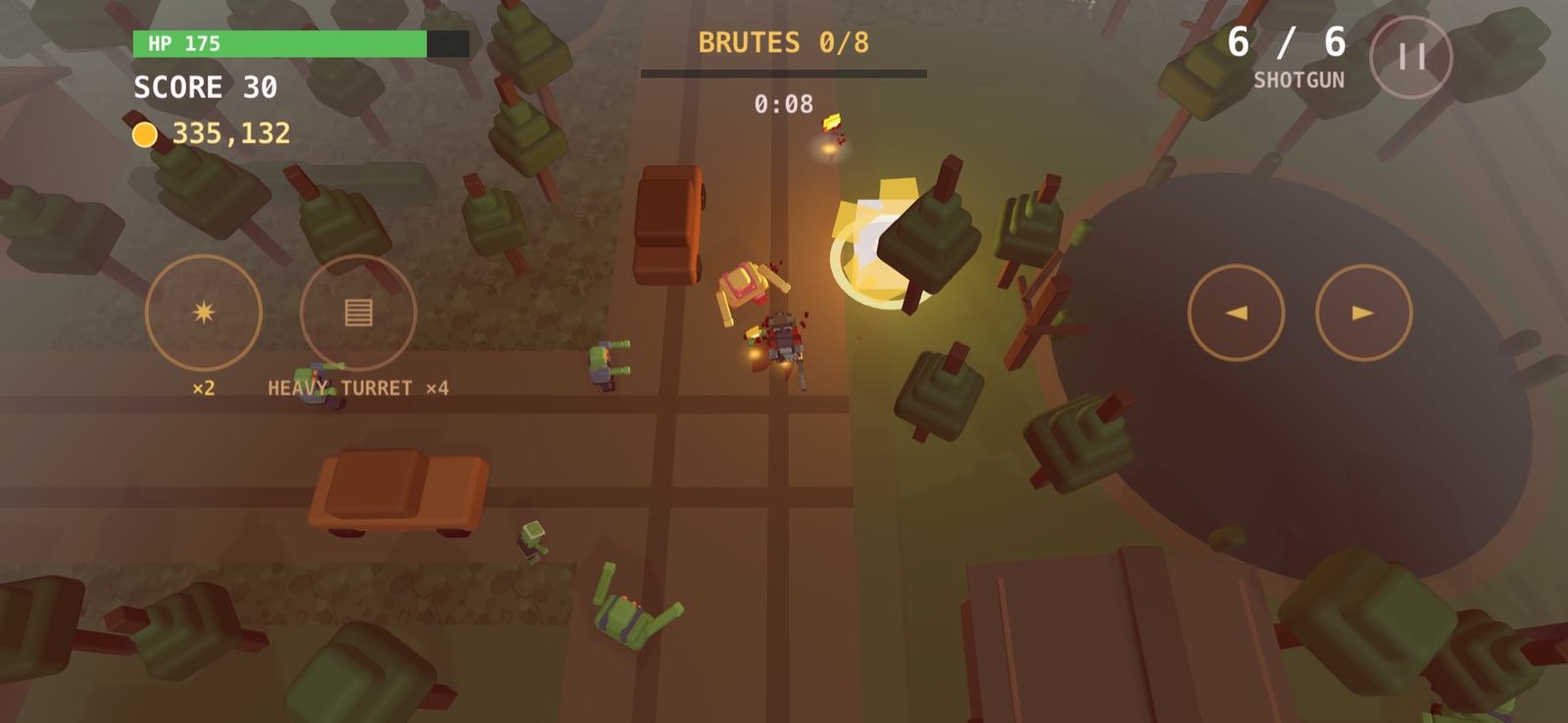
A joystick appears wherever your left thumb lands, and another wherever your right one does. Push the right one out far enough and you are firing. Everything hard about this game is somewhere else.
The camera looks ahead in the direction you are pointing and shakes when you fire. No reload button and no way to ask for one: an empty magazine fills itself the moment it runs dry.
Press ▤ and time drops to a twelfth of itself, the camera pulls in and a board of squares comes up around you. Put a barricade where they are coming from. The world behind it is still running.
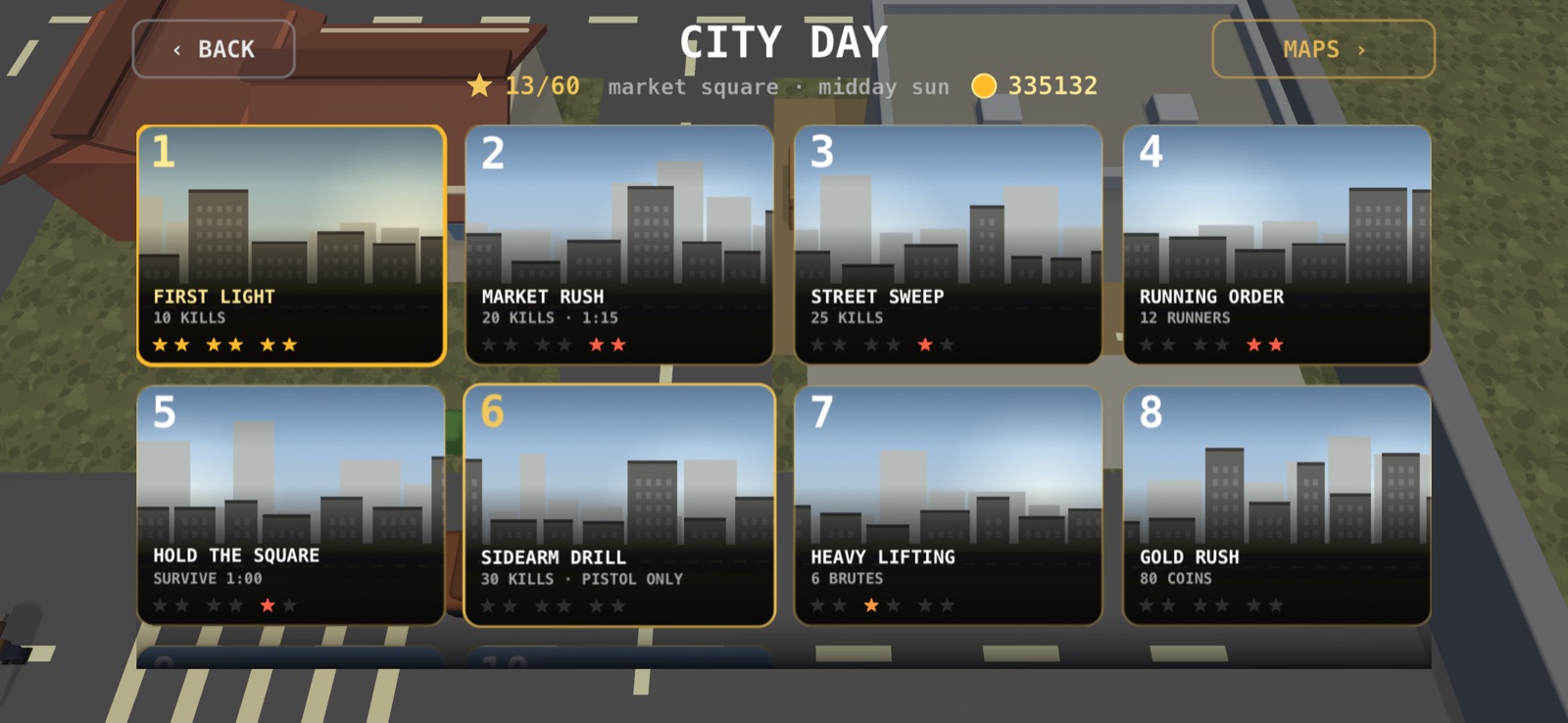
One for finishing, and one for each of the two goals printed on the card — at each of three settings. A level turns gold when all six are in, and a card stuck on five is hard to leave alone.
Every one asks something different of you. The belt gun takes your legs away for as long as you hold the trigger down; the revolver gives you six rounds and then a hole in the fight while he reloads. Against a single zombie the launcher is the worst money on the counter, and against twelve of them there is nothing else.
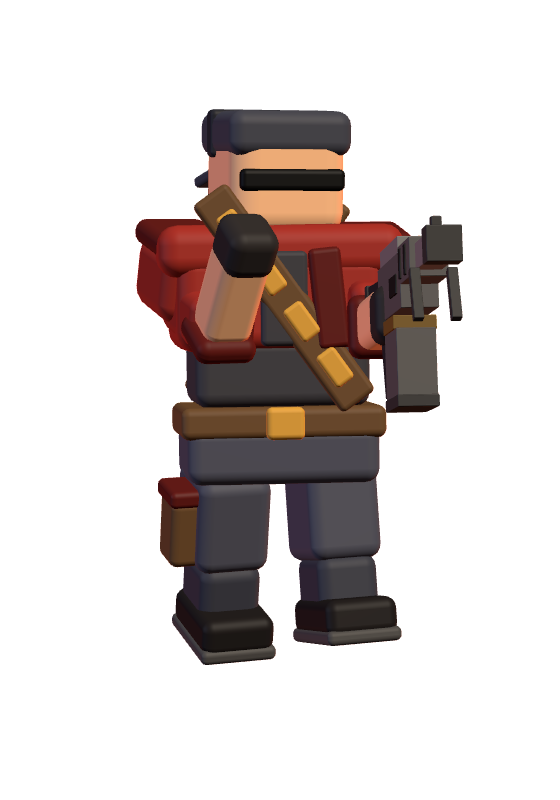
The gun you are handed, and the only one you never buy. One deliberate shot at a time: slower than the machine pistol, tighter, and with more of a bang behind it.
Yours from the start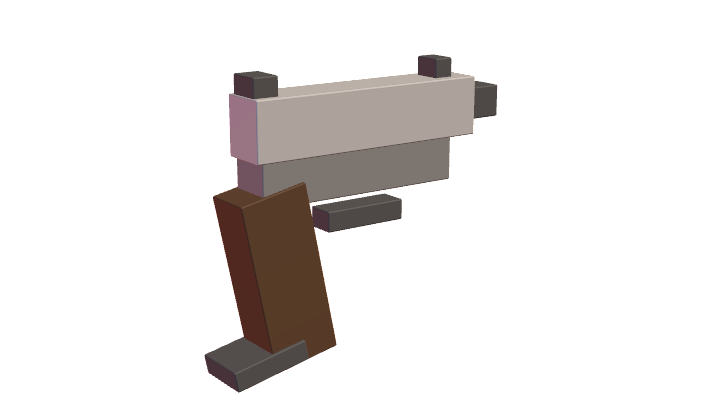
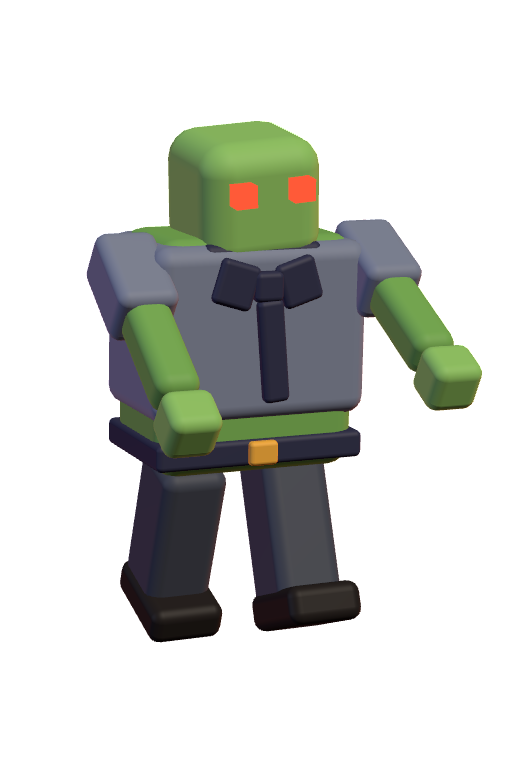
The green strain carries the first ten difficulties: it comes straight at you and it walks into whatever you put in the way. Then the red strain arrives, and the first thing it does is go round your wall.
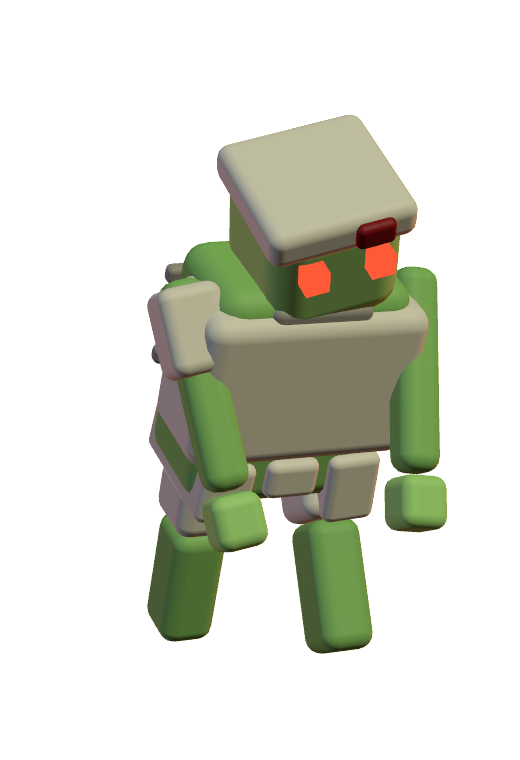
Drags a leg and nearly falls over on every step. Slow enough to walk away from — until there are nine of them.
The classic: upright, arms out in front, steady pace, and it never once thinks about stopping.
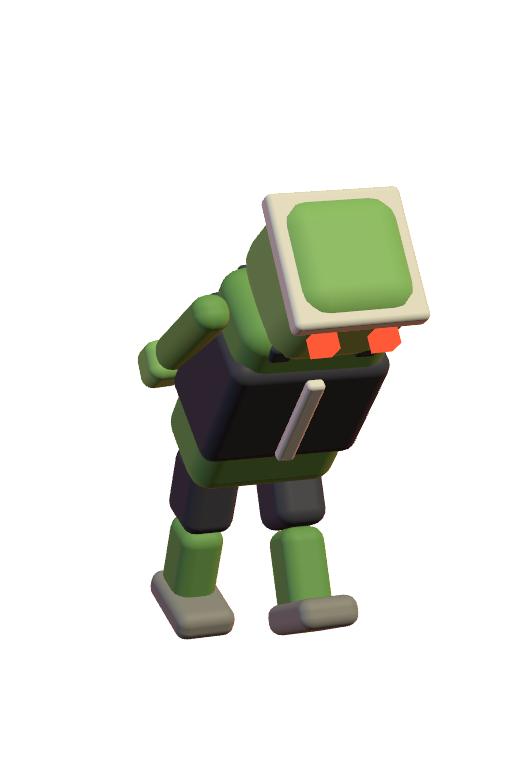
Lean, bent deep forward, arms pumping. It is on you before you have decided what to do about it.
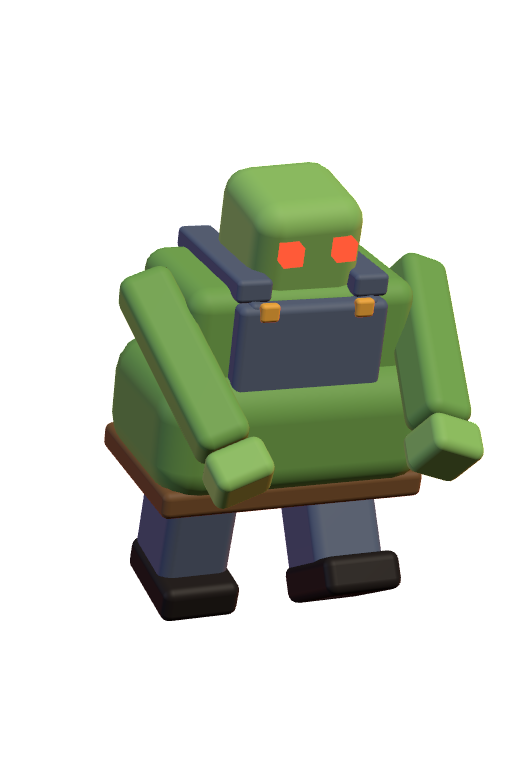
Big and slow, rocking with its whole body. Takes a magazine and keeps coming anyway.
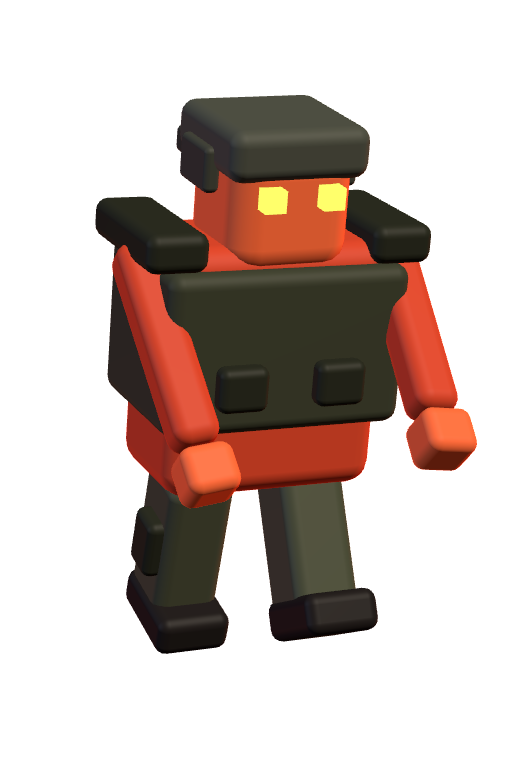
The one that teaches you what red means. Goes round a wall rather than into it, and cuts the corner you were running to.
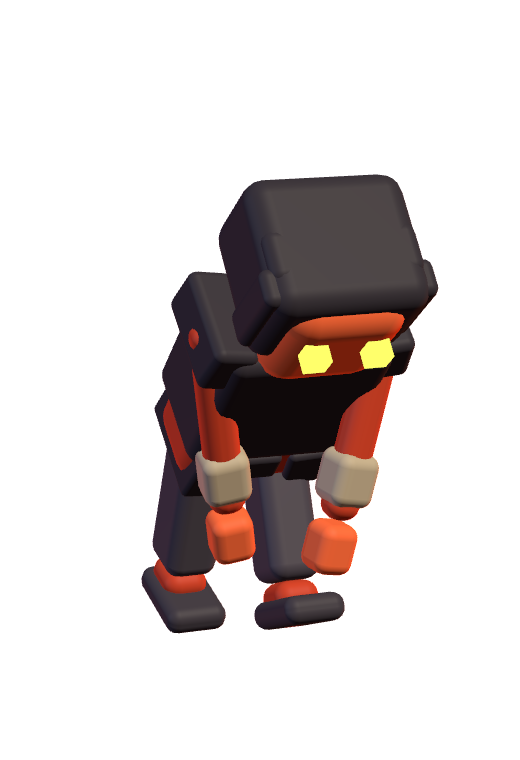
Fast, thin, always the first to arrive. Tears at anything you put between it and you.
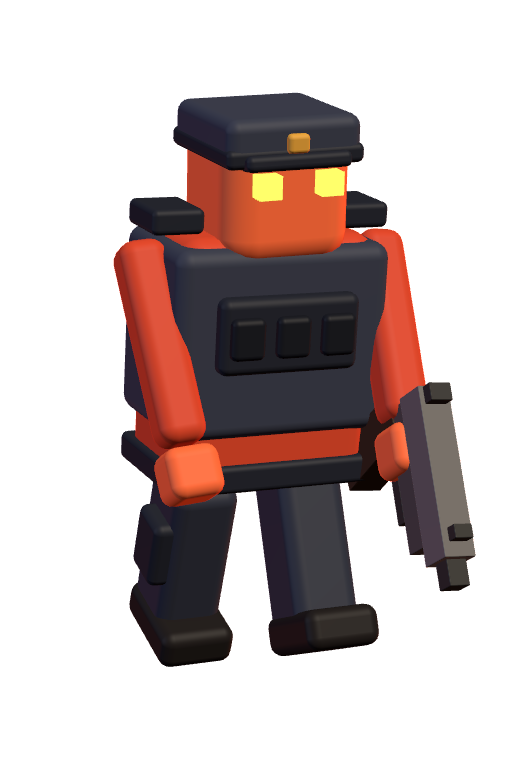
Still holding the sidearm it died with. Hangs back and empties it in your direction — badly, but a stray round is still a round.
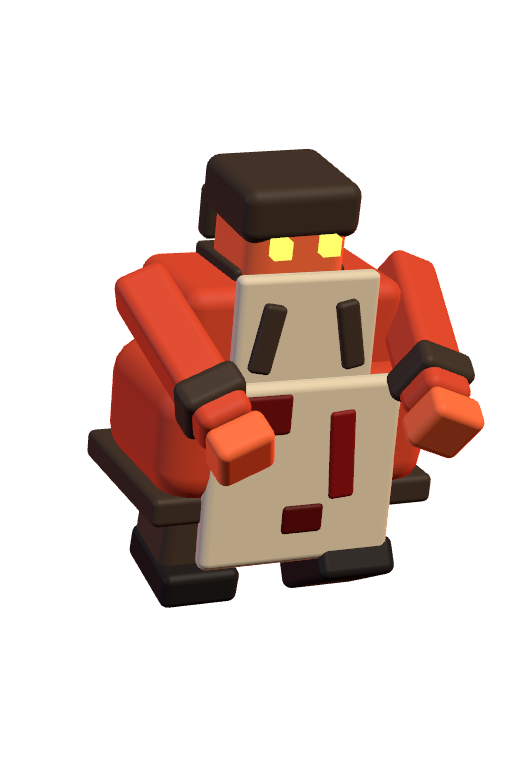
The red brute. Enormous, unhurried, and the one thing in the game that goes through a barricade faster than round it.
A barricade does not kill anything. It takes the straight line away from thirty of them and hands you the one gap you chose. Put a turret behind it and you are holding two approaches with one thumb.
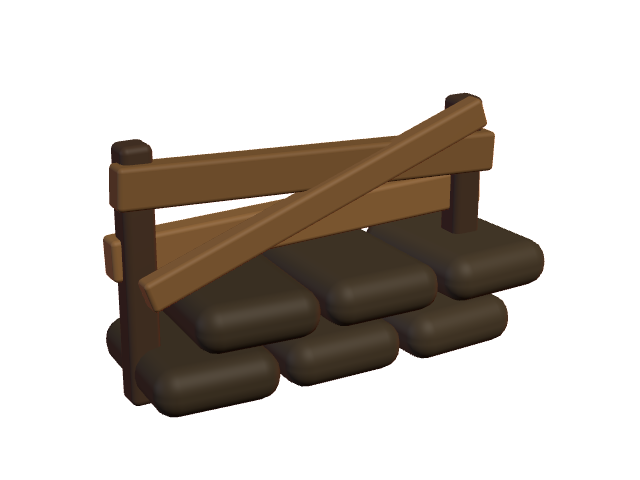
Planks and sandbags. The first thing a red zombie bites instead of you.
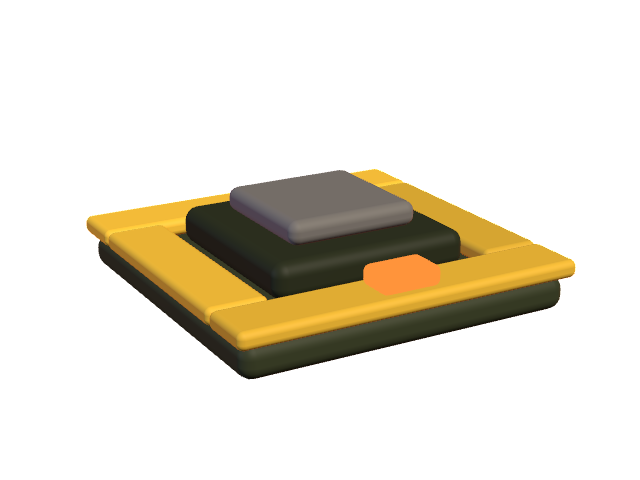
A plate on a pan of explosive. The crowd sets it off and you never do.
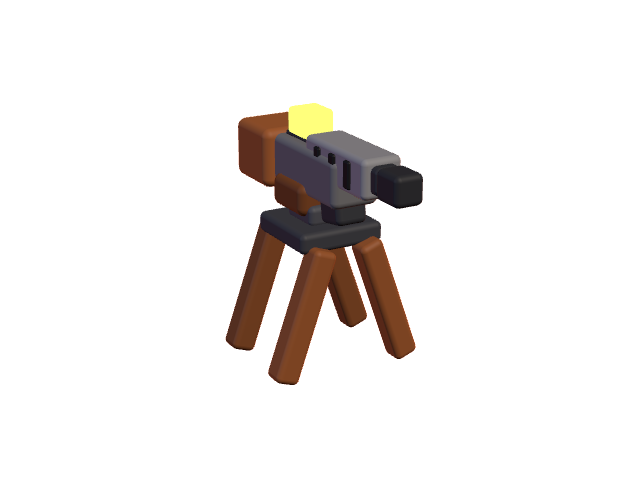
A poor shot on purpose. What you buy is a second angle that never looks away.
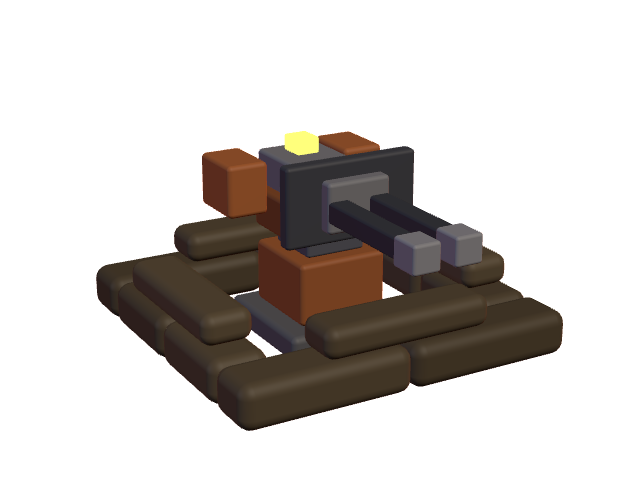
Twin autocannon on a sandbagged deck. Stands on four squares and earns them.
Every town is a 68-metre square with ten levels in it. You buy the town once, with coins the horde dropped somewhere else, and all ten levels open together — nothing inside it ever has a price on it again. City Day is free, so a fresh purse always has a way in, and the dearest town in the game costs less than one scruffy pass of that one.
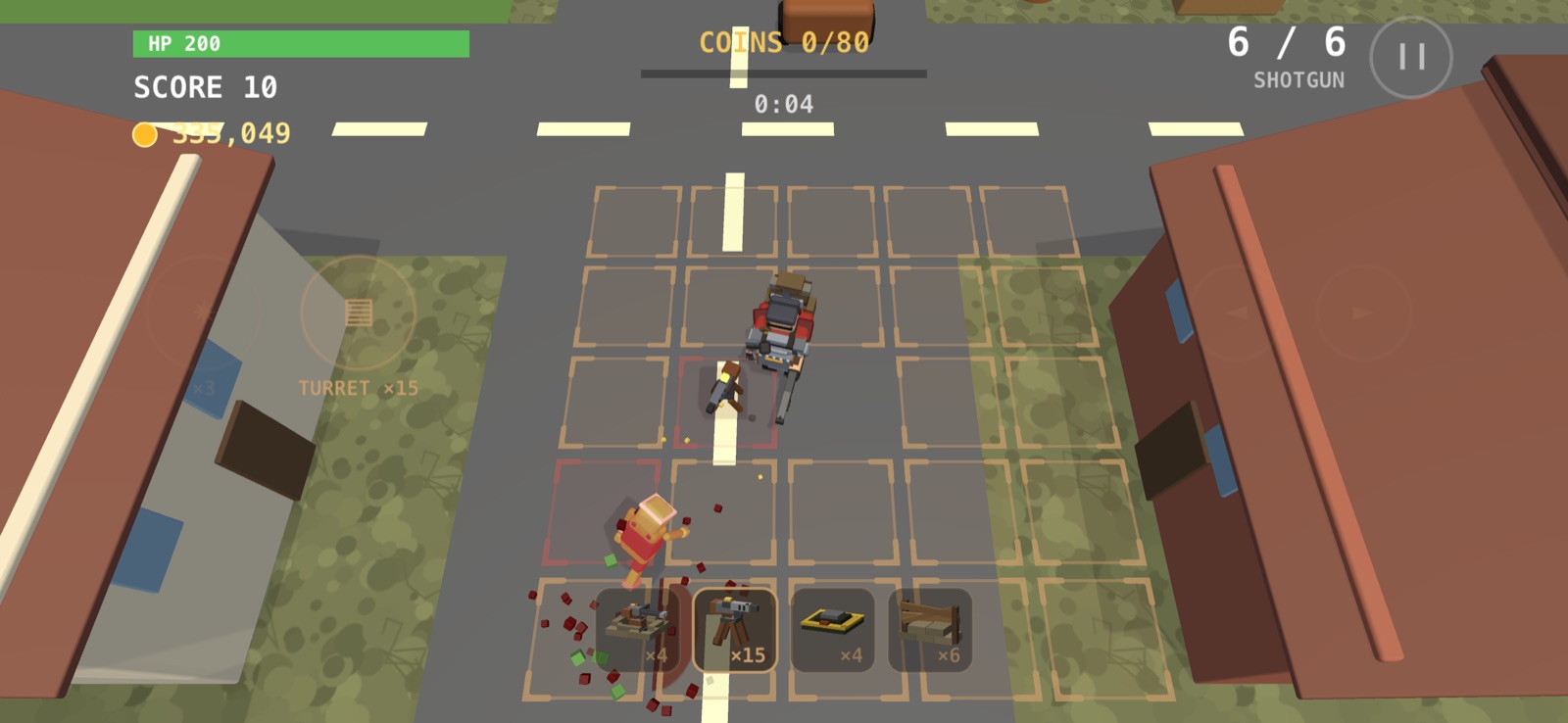
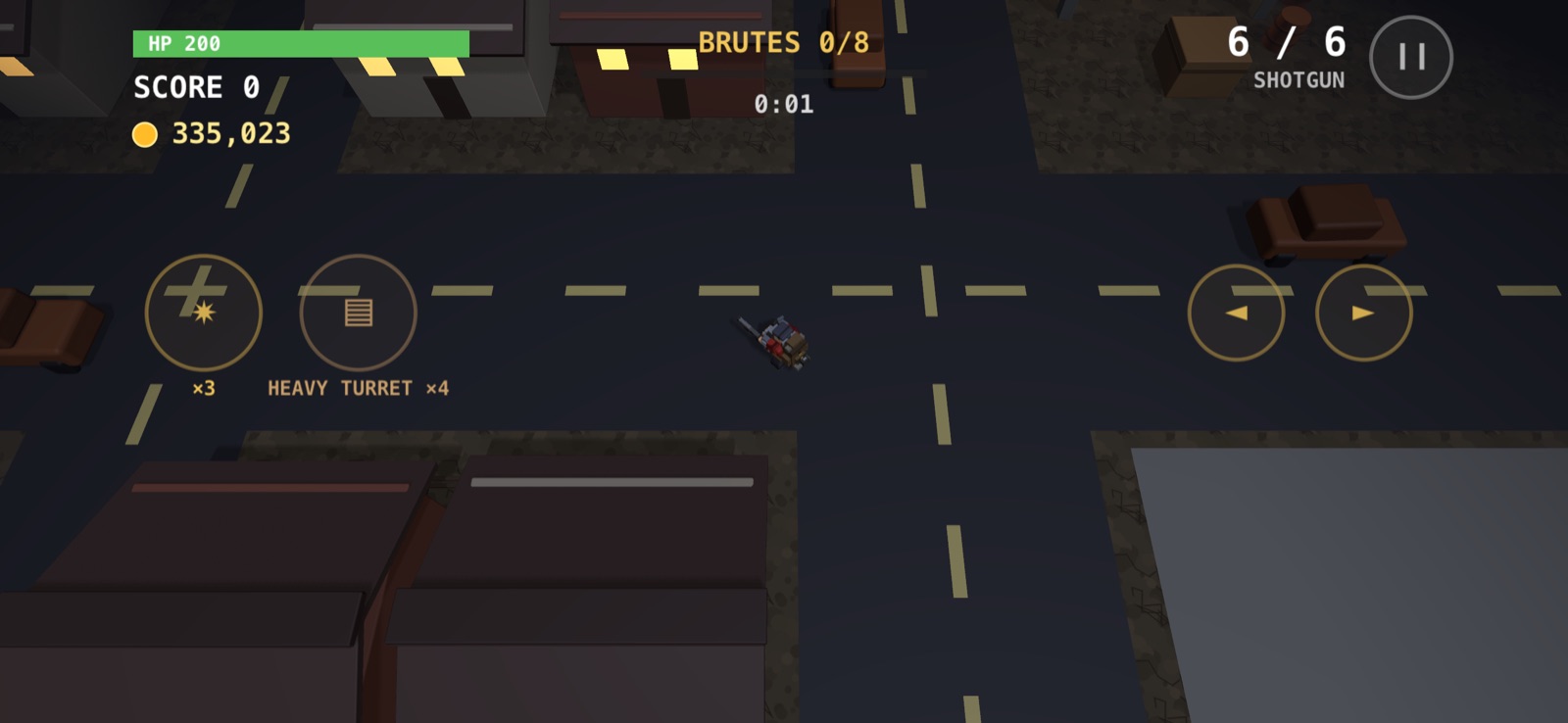
Exactly this many turn up and no more, so the last kill is always the one that ends it.
This many kills before it runs out. They keep coming, so there is no waiting out a straggler with eight seconds left.
Everything else still turns up and still bites. Only the quarry counts.
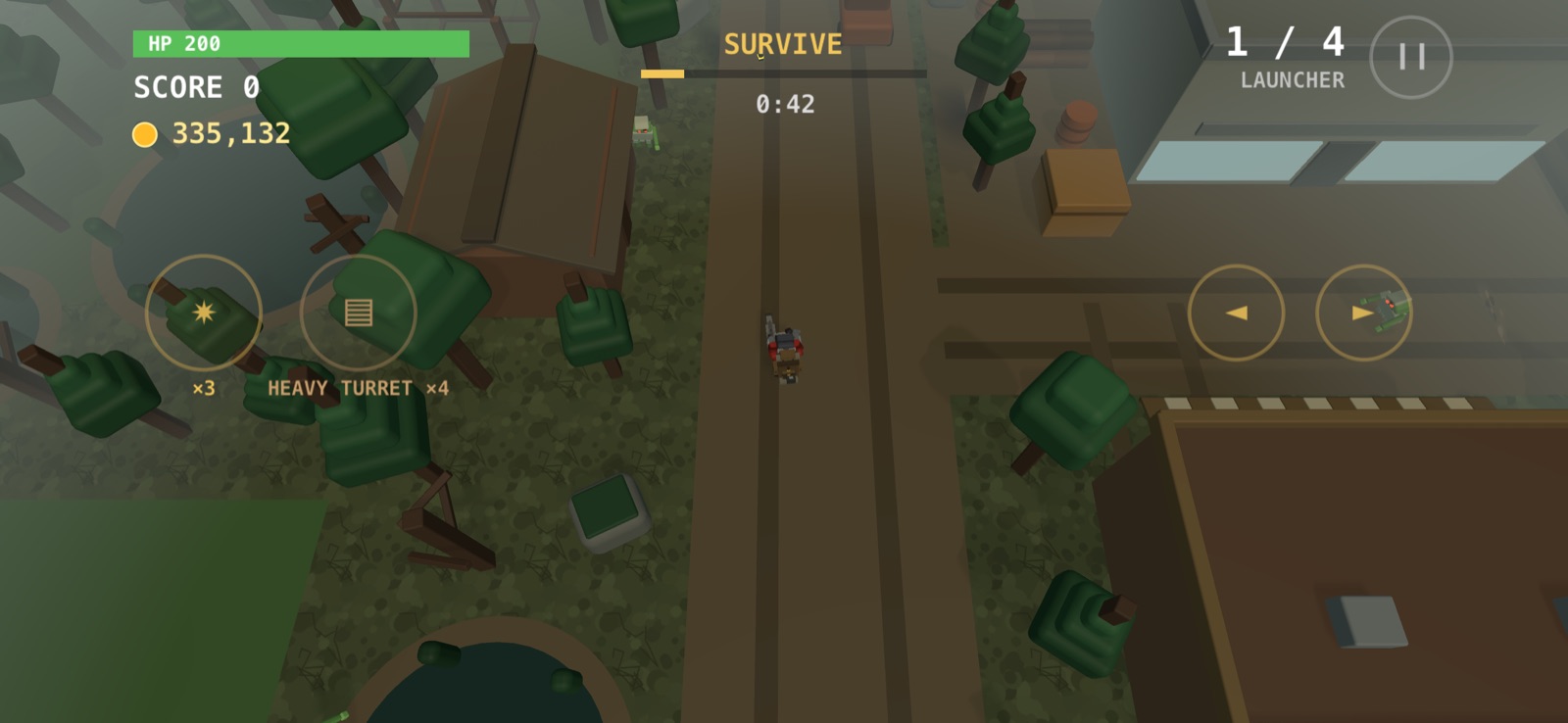
Stay alive. The clock counts down to a win rather than to a loss.
The one job that makes you walk into the open ground you spent nine levels learning to avoid.
Normal, Hard and Veteran. More of them, faster, and harder to put down; the health bar is the same.
A rare drop off a body: double coins, instant kill, or the whole horde slowed to under half pace.
One phone hosts, up to three more join over the local network, and the four of you fight endless waves on a map the host picks. Everybody walks in with what their own phone has unlocked — your guns, your upgrades, your pack — and everybody builds off their own board.
Every model in the game is built from boxes, and every sound in it is computed rather than loaded off disk.
It lands, it splashes, and it sits on the ground while you run through it. Then the lightning goes off and empties the fog off the whole site for a fifth of a second, and the thunder catches up a moment later.
He moves differently as his health drops — limping, hunched over, panting in place, with a weapon that slowly sags. You can read how badly it is going without looking at the bar.
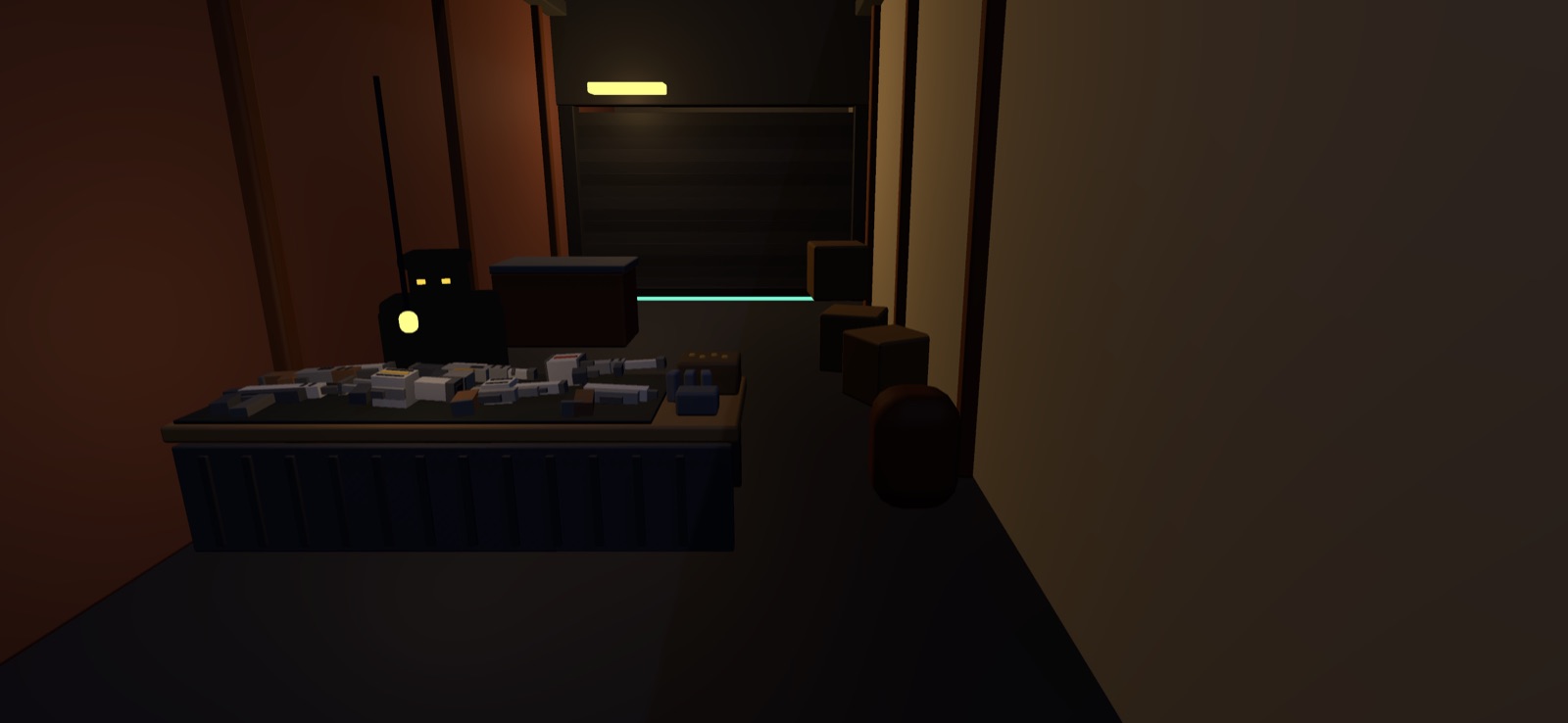
A dealer in silhouette with guns you do not own yet shown as silhouettes too, and a cyborg mechanic at the dead end of the alley who sells a pocket knife, body armour, a trauma rig and a bigger backpack.
MEATGRID is in the last stretch before the App Store. Send us a line and we will tell you the day it lands. We will not write to you about anything else.